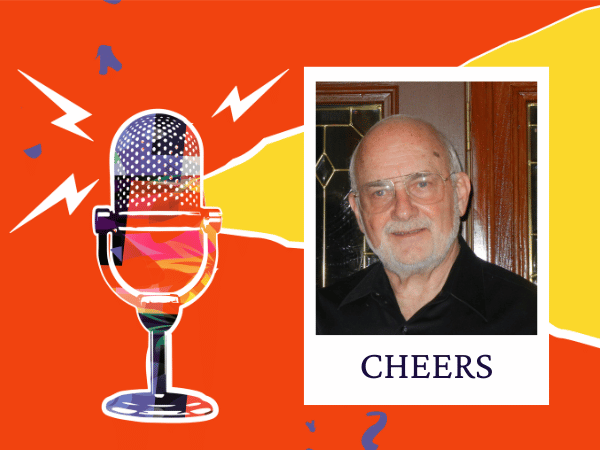
Christopher Ptachik will tell you, with genuine sincerity, that this isn’t his story.
He’s 83 years old, a retired Air Force officer with 28 years of service, and a man who once helped develop guidance systems for the rockets that took us to the moon. But sit him down and ask about his career? He pivots quickly:
“I don’t think this story is about me,” he says. “It’s about CHEERS.”
CHEERS—formally Communities Helping Each and Everyone Reach Success—is a small nonprofit in Green County, Ohio, dedicated to promoting fulfilling lives for adults with developmental disabilities. And every weekend of the year, they put on social, educational, and recreational programs.
CHEERS turns 30 this October.
The Gap Nobody Was Filling
Chris and his wife have been married 63 years. Both their 57-year-old son and 49-year-old daughter were born with Fragile X syndrome, a genetic condition affecting cognitive development.
As he tells the story: “Once they got out of school and went to work, the work [itself] was fine. But business- or work-oriented social programs didn’t include them. If there was a party on the weekend, they weren’t invited or they didn’t go because it just didn’t fit.”
He wasn’t the only Green County parent who noticed, either. A group of families found themselves with a shared frustration, and a shared question: What happens to our children after the structure of school ends and the adult social world closes its doors?
CHEERS was their answer.
What a Good Saturday Looks Like
Programming is modest: movies, lunches out, crafts, game nights, dances. The kinds of things anyone might do on a Saturday, and that’s the point.
“Live music is the best,” Chris says, smiling. They’ve had the same band, a husband-and-wife duo playing guitar and singing, for close to 20 years. “Everybody loves them. And everybody knows everybody.”
Average attendance on any given Saturday hovers around half of their membership, but on dance nights with live music, Chris says, “we’ll get everybody.”
They operate on a $30,000 annual budget, with programs designed to be self-sustaining. Members pay a modest fee per activity to cover costs and pay annual dues of $150. The largest single expense is their sole paid employee, Abby Watkins, their program director who has been with the organization for 21 years.
Chris’s tone shifts when Abby comes up. Slower. Quieter. And unmistakably proud.
“We couldn’t have found a better person. She’s the heart of the organization.”
When Loving Parents Build What’s Missing
Chris spent about an hour sharing details of their organization, how they operate, and what programming they offer members. But when his daughter called during the interview, what happened next said more than any number of words ever could.
“Hi Pam. I’m on a video call about CHEERS right now. How about if I call you back in a while, honey? All right. Love you too. Mmbye.”
Pam was checking in with Dad during their daily morning phone call.
It’s their ritual.
And, perhaps, a unique one. Because how many people do you know who talk with their parents every day? Not many. That’s the beauty of CHEERS; they run almost entirely on parental effort. Planning the calendar. Leading activities. Writing the monthly newsletter. Staffing the Thursday phone line that members call to confirm weekend plans.
That simple phone call spoke volumes about the love, care, and affection he has for his children. And he’s not the only parent who feels that way.
Today, 14 of their 28 members live across four different group homes. That outcome didn’t happen by accident.
“We decided we didn’t want to get old and have this become an emergency thing,” Chris shares. “So a group of families, all of whom have known each other for years, found a lot, created a nonprofit to build the house, hired a contractor, and built it. Our kids live there now. All of us CHEERS members did that.”
Parting Words
When we first asked to interview Chris, he was surprised.
What did they have to offer, he thought? They’re “just” a $30,000 operation, and other than staying operational for ~30 years, perhaps wouldn’t have much to share with the larger nonprofits we count among our readership.
But if Chris is still wondering if a small organization has something to teach, there are 28 members with something to do every weekend, half of them living in homes built just for them, who would say yes.
“In our business,” Chris begins, “it’s our kids that are really the motivators. We don’t need money. It’s about leaving them in a better place when we’re on the wrong side of the grass.”